A Possible Diagnostic Value of Zinc Transporter-8 Autoantibody for Pediatrics Type 1 Diabetic Ketoacidosis; A Systematic Review
DOI:
https://doi.org/10.59675/M221Keywords:
pediatrics, children, diabetic ketoacidosis, type 1 diabetes mellitus, zinc transporter-8 autoantibodiesAbstract
Background: Type 1 diabetes mellitus (T1D) is a health concern all around the world. One of the most dramatic features of this disease is pediatric incidence. The most important metabolic clinical feature of T1D is ketosis and ketoacidosis. The exact role of autoantibodies in T1D pathogenesis is not completely clear yet. However, the diagnostic use for these autoantibodies is established. Zinc Transporter-8 Autoantibody (ZnT8A) is assumed to be the most specific antibody for islet beta cells. The current study aims to evaluate all relevant documents with possible risk and diagnostic value of ZnT8A for pediatrics T1D ketoacidosis (DKA) by a systematic review approach.
Materials and methods: Most popular electronic databases such as PubMed, Scopus, Science Direct, and Google Scholar were used for searches the following keywords pediatrics, children, diabetic ketoacidosis, type 1 diabetes mellitus, zinc transporter-8 autoantibodies without year or any other limitations. All relevant original studies that mention ZnT8A and Ketosis or DKA in the pediatric population were evaluated and in case of being matched with the criteria extracted.
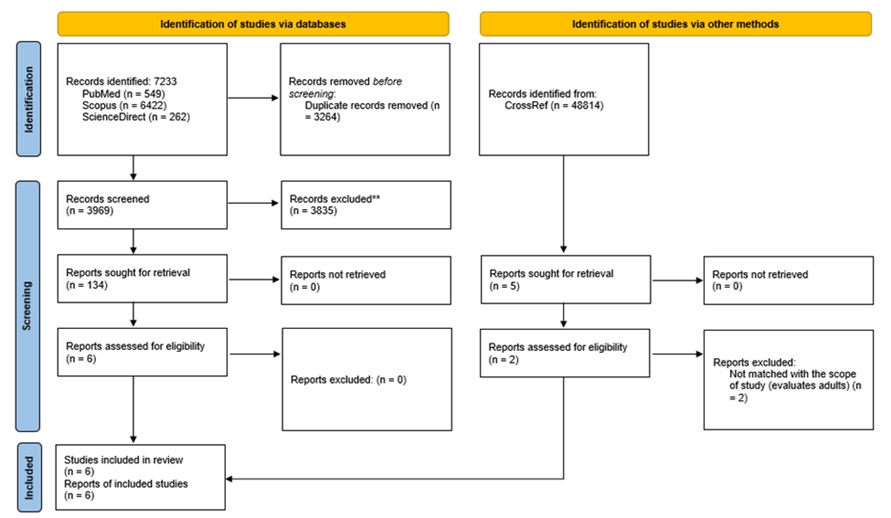
Results: Primary search results led to 7233 queries. By considering the study inclusion criteria and bias assessment, six studies were included. Majority of included studies suggested ZnT8A as a risk factor for DKA in T1D pediatrics.
Conclusion: The current study tried to provide an overview on the conducted studies in possible risk and diagnostic value of ZnT8A for pediatrics DKA. The majority of included studies suggest the ZnT8A as a risk factor with diagnostic association to DKA, while there are some conflicting documents. We tried to highlight the importance of this research theme for future studies to maintain a more precise conclusion with clinical relevance.
References
Achenbach P, Lampasona V, Landherr U, Koczwara K, Krause S, Grallert H, et al. Autoantibodies to zinc transporter 8 and SLC30A8 genotype stratify type 1 diabetes risk. Diabetologia. 2009;52(9):1881-8. doi: 10.1007/s00125-009-1414-9. DOI: https://doi.org/10.1007/s00125-009-1438-0
Chimienti F, Devergnas S, Pattou F, Schuit F, Garcia-Cuenca R, Vandewalle B, et al. In vivo expression and functional characterization of the zinc transporter ZnT8 in glucose-induced insulin secretion. J Cell Sci. 2006;119(Pt 20):4199-206. doi: 10.1242/jcs.03164. DOI: https://doi.org/10.1242/jcs.03164
Dang M, Rockell J, Wagner R, Wenzlau JM, Yu L, Hutton JC, et al. Human type 1 diabetes is associated with T cell autoimmunity to zinc transporter 8. J Immunol. 2011;186(10):6056-63. doi: 10.4049/jimmunol.1003960. DOI: https://doi.org/10.4049/jimmunol.1003815
De Grijse J, Asanghanwa M, Nouthe B, Albrecher N, Goubert P, Vermeulen I, et al. Predictive power of screening for antibodies against insulinoma-associated protein 2 beta (IA-2β) and zinc transporter-8 to select first-degree relatives of type 1 diabetic patients with risk of rapid progression to clinical onset of the disease: implications for prevention trials. Diabetologia. 2010;53(3):517-24. doi: 10.1007/s00125-009-1594-3. DOI: https://doi.org/10.1007/s00125-009-1618-y
Elmaoğulları S, Uçaktürk SA, Elbeg Ş, Döğer E, Tayfun M, Gürbüz F, et al. Prevalence of ZnT8 antibody in Turkish children and adolescents with new onset type 1 diabetes. J Clin Res Pediatr Endocrinol. 2018;10(2):108-14. doi: 10.4274/jcrpe.5064. DOI: https://doi.org/10.4274/jcrpe.5020
Fukunaka A, Fujitani Y. Role of zinc homeostasis in the pathogenesis of diabetes and obesity. Int J Mol Sci. 2018;19(2):476. doi: 10.3390/ijms19020476. DOI: https://doi.org/10.3390/ijms19020476
Ghalwash M, Anand V, Lou O, Martin F, Rewers M, Ziegler AG, et al. Islet autoantibody screening in at-risk adolescents to predict type 1 diabetes until young adulthood: a prospective cohort study. Lancet Child Adolesc Health. 2023;7(4):261-8. doi: 10.1016/S2352-4642(23)00009-4. DOI: https://doi.org/10.1016/S2352-4642(22)00350-9
Gorus F, Balti E, Vermeulen I, Demeester S, Van Dalem A, Costa O, et al. Screening for insulinoma antigen 2 and zinc transporter 8 autoantibodies: a cost-effective and age-independent strategy to identify rapid progressors to clinical onset among relatives of type 1 diabetic patients. Clin Exp Immunol. 2013;171(1):82-90. doi: 10.1111/cei.12006. DOI: https://doi.org/10.1111/j.1365-2249.2012.04675.x
Grace SL, Bowden J, Walkey HC, Kaur A, Misra S, Shields BM, et al. Islet autoantibody level distribution in type 1 diabetes and their association with genetic and clinical characteristics. J Clin Endocrinol Metab. 2022;107(12). doi: 10.1210/clinem/dgac573. DOI: https://doi.org/10.1210/clinem/dgac507
Gregory GA, Robinson TI, Linklater SE, Wang F, Colagiuri S, de Beaufort C, et al. Global incidence, prevalence, and mortality of type 1 diabetes in 2021 with projection to 2040: a modelling study. Lancet Diabetes Endocrinol. 2022;10(10):741-60. doi: 10.1016/S2213-8587(22)00212-5. DOI: https://doi.org/10.1016/S2213-8587(22)00218-2
Juusola M, Parkkola A, Härkönen T, Siljander H, Ilonen J, Åkerblom HK, et al. Positivity for zinc transporter 8 autoantibodies at diagnosis is subsequently associated with reduced β-cell function and higher exogenous insulin requirement in children and adolescents with type 1 diabetes. Diabetes Care. 2016;39(1):118-21. doi: 10.2337/dc15-0996. DOI: https://doi.org/10.2337/dc15-1027
Kawasaki E, Nakamura K, Kuriya G, Satoh T, Kobayashi M, Kuwahara H, et al. Zinc transporter 8 autoantibodies in fulminant, acute‐onset, and slow‐onset patients with type 1 diabetes. Diabetes Metab Res Rev. 2011;27(8):895-8. doi: 10.1002/dmrr.1256. DOI: https://doi.org/10.1002/dmrr.1269
Li J, Sun X, Luo S, Lin J, Xiao Y, Yu H, et al. The Positivity Rate of IA-2A and ZnT8A in the Chinese Han Population With Type 1 Diabetes Mellitus: Association With rs1143627 and rs1143643 Polymorphisms in the IL1B Gene. Front Pharmacol. 2021;12:729890. doi: 10.3389/fphar.2021.729890. DOI: https://doi.org/10.3389/fphar.2021.729890
Liberati A, Altman DG, Tetzlaff J, Mulrow C, Gøtzsche PC, Ioannidis JP, et al. The PRISMA statement for reporting systematic reviews and meta-analyses of studies that evaluate health care interventions: explanation and elaboration. Ann Intern Med. 2009;151(4). doi: 10.7326/0003-4819-151-4-200908180-00136. DOI: https://doi.org/10.7326/0003-4819-151-4-200908180-00136
Niechciał E, Rogowicz-Frontczak A, Piłaciński S, Fichna M, Skowrońska B, Fichna P, et al. Autoantibodies against zinc transporter 8 are related to age and metabolic state in patients with newly diagnosed autoimmune diabetes. Acta Diabetol. 2018;55(3):287-94. doi: 10.1007/s00592-017-1098-3. DOI: https://doi.org/10.1007/s00592-017-1091-x
Rochmah N, Faizi M, Windarti SW. Zinc transporter 8 autoantibody in the diagnosis of type 1 diabetes in children. Clin Exp Pediatr. 2020;63(10):402-7. doi: 10.3345/cep.2020.00087. DOI: https://doi.org/10.3345/cep.2019.01221
Ross C, Ward ZJ, Gomber A, Owais M, Yeh JM, Reddy C-L, et al. The prevalence of islet autoantibodies in children and adolescents with type 1 diabetes mellitus: a global scoping review. Front Endocrinol. 2022;13:815703. doi: 10.3389/fendo.2022.815703. DOI: https://doi.org/10.3389/fendo.2022.815703
Rutter GA, Chimienti F. SLC30A8 mutations in type 2 diabetes. Diabetologia. 2015;58(1):31-6. doi: 10.1007/s00125-014-3388-9. DOI: https://doi.org/10.1007/s00125-014-3405-7
Salonen K, Ryhänen S, Härkönen T, Ilonen J, Knip M, Register FPD. Autoantibodies against zinc transporter 8 are related to age, metabolic state and HLA DR genotype in children with newly diagnosed type 1 diabetes. Diabetes Metab Res Rev. 2013;29(8):646-54. doi: 10.1002/dmrr.2447. DOI: https://doi.org/10.1002/dmrr.2440
Selimoglu MA, Koc ZP, Temizel IN, Kaya D, Erdemir G. Autoantibody positivity in children with type 1 diabetes mellitus in Turkey: a cross-sectional study. Diabetes Metab Syndr. 2019;13(2):1523-7. doi: 10.1016/j.dsx.2019.03.025. DOI: https://doi.org/10.1016/j.dsx.2019.03.025
Serafini P, Niegowska M, Manzari C, Alvarez AG, Zucchi D, Tonolo G, et al. Detection of zinc transporter 8 autoantibodies in a cohort of Italian children and adolescents with newly diagnosed type 1 diabetes. Acta Diabetol. 2016;53(3):409-15. doi: 10.1007/s00592-015-0809-1.
Shepherd M, Shields BM, Hudson M, McDonald TJ, Colclough K, Oram R, et al. A UK nationwide twin study to identify type 1 diabetes genetic and environmental risk factors: the T1D GENE study. Front Endocrinol. 2023;14:1162185. doi: 10.3389/fendo.2023.1162185.
Simell S, Törn C, Simell T, Markula P, Simell O, Veijola R, et al. Age at initiation of persistent insulin autoantibody responses is a key determinant of total progression rate to type 1 diabetes in children with high-risk HLA-DR/DQ alleles. Diabetes. 2009;59(7):1747-55. doi: 10.2337/db09-1166. DOI: https://doi.org/10.2337/db09-1166
Steed L, Kapur S, Grant SFA, Smith CP, Bingley PJ, Patterson CC, et al. The relationship between genetic risk, autoantibodies, and age of onset of type 1 diabetes in children: analysis from the UK and Ireland Childhood Diabetes Register. Front Endocrinol. 2022;13:936401. doi: 10.3389/fendo.2022.936401.
Uibo R, Lernmark Å. Genetic susceptibility to autoimmune disease: the human leukocyte antigen complex and the insulin gene. Diabetes Care. 2008;31 Suppl 2. doi: 10.2337/dc08-s236.
Villalobos-Comparán M, Villarreal-Molina MT, Rodríguez-Guillén R, López-Alarcón M, Flores-Dorantes MT, Saucedo-Villarreal N, et al. Association of the SLC30A8 gene variants with type 2 diabetes in a Mexican population. Mol Genet Metab. 2009;97(3):304-9. doi: 10.1016/j.ymgme.2009.04.004. DOI: https://doi.org/10.1016/j.ymgme.2009.04.004
Wenzlau JM, Juhl K, Yu L, Moua O, Sarkar SA, Gottlieb P, et al. The zinc transporter ZnT8 (Slc30A8) is a major autoantigen in human type 1 diabetes. Proc Natl Acad Sci U S A. 2007;104(43):17040-5. doi: 10.1073/pnas.0705894104. DOI: https://doi.org/10.1073/pnas.0705894104
Wenzlau JM, Liu Y, Yu L, Moua O, Fowler KT, Schiffmann R, et al. A common nonsynonymous single nucleotide polymorphism in SLC30A8 is associated with type 1 diabetes. Diabetes. 2008;57(10):2758-61. doi: 10.2337/db08-0615. DOI: https://doi.org/10.2337/db08-0522
Wong FS, Hu C, Zhang L, Du W, Alexopoulou L, Flavell RA. The role of Toll‐like receptors in insulitis and diabetes. Ann N Y Acad Sci. 2008;1150:146-50. doi: 10.1196/annals.1447.053. DOI: https://doi.org/10.1196/annals.1447.039
Xu M, Zhou M, Chen S, Wang Y, Cao X, Zuo T, et al. Prevalence and clinical characteristics of zinc transporter 8 autoantibody (ZnT8A) in Chinese children with type 1 diabetes. Diabetes Metab Res Rev. 2015;31(3):302-10. doi: 10.1002/dmrr.2601. DOI: https://doi.org/10.1002/dmrr.2601
Yu L, Herold K, Krause-Steinrauf H, McGee P, Bundy B, Pugliese A, et al. Rituximab selectively suppresses specific islet antibodies. Diabetes. 2011;60(10):2560-5. doi: 10.2337/db11-0297. DOI: https://doi.org/10.2337/db11-0674
Ziegler AG, Bonifacio E. Age-related islet autoantibody incidence in offspring of patients with type 1 diabetes. Diabetologia. 2012;55(7):1937-43. doi: 10.1007/s00125-012-2513-x. DOI: https://doi.org/10.1007/s00125-012-2472-x
Ziegler AG, Pflueger M, Winkler C, Achenbach P, Akolkar B, Krischer JP, et al. Development of autoimmunity in the young offspring of mothers with type 1 diabetes. Diabetologia. 2011;54(10):2415-21. doi: 10.1007/s00125-011-2261-9.
Downloads
Published
Issue
Section
License
Copyright (c) 2024 Academic International Journal of Medical Sciences

This work is licensed under a Creative Commons Attribution 4.0 International License.